News

CALL FOR APPLICATIONS: 2025 Jomo Martin Nkunika Memorial Scholarship

The BRPT kindly asks that you please share this grant opportunity with your students/colleagues!

Overview

The BRPT is excited to again offer a grant towards tuition costs to a promising student of polysomnography, and we are now accepting applications!  The scholarship award is up to $3,000 toward tuition costs or the actual cost of tuition as invoiced from the education provider, whichever is less.

The scholarship is named in honor of Jomo Martin Nkunika, MSHCA, BS, CCSH, RPSGT. Jomo, a former member of the BRPT Board of Directors, was a strong advocate of sleep education and was the program director and adjunct professor of the Sleep Medicine Technology program at Montgomery College in Maryland. In addition, Jomo was a clinical manager with MedBridge Health at the Frederick Memorial Hospital Advanced Center for Sleep Studies.

Jomo was an integral part of the BRPT Board of Directors from 2016 until 2019 when he was diagnosed with Amyotrophic Lateral Sclerosis (ALS), also known as Lou Gehrig’s disease. Sadly, Jomo lost his battle against ALS in July 2021.

Application Window

The BRPT is now accepting applications.  The deadline for receipt of applications is the close of business on Wednesday, October 15th, 2025. Once the application window closes, the BRPT Scholarship Committee will review the applications to determine the best qualified applicants after which the grant recipient will be notified. The typical review time is 30-45 business days.

Eligibility

Applicants must hold a high school diploma or equivalent. In addition, applicants must be currently enrolled in an approved CAAHEP-accredited PSG program, a CAAHEP-accredited END program with a PSG add on, or a CoARC accredited program with a PSG add on OR must have proof of acceptance one.

Application Criteria

All applicants must:

  • Submit a completed application form, which can be found here.
  • Submit proof of enrollment or acceptance to a CAAHEP/CoA program as outlined above (i.e. acceptance letter or official transcript).
  • Submit a resume or short biography addressing your work experience.
  • Submit a letter of recommendation.
  • Submit a written statement: In 200-500 words, please describe your interest in sleep and why you feel the scholarship is needed or deserved.  Please be sure to address the following in your statement:
    • Clarity of Purpose – Clearly explain your interest in sleep medicine and your goals in pursuing this field.
    • Cultural Perspective – Reflect on any cultural, community, or personal experiences that shape your perspective on sleep health and patient care.
    • Knowledge of the Field – Demonstrate your understanding of current issues, challenges, or opportunities within the field of sleep technology.
    • Personal Motivation – Share your personal motivations for applying and how the scholarship will support your future goals.

Important Terms

Please note that this grant is paid directly to the educational institution and cannot be used for reimbursement of tuition previously paid.  If your tuition has been paid in full, you should not apply for this grant.

News

Legacy of Sleep: Three Generations and the Passion Behind the Profession

Spotlight on Brittany Schaeffer, RPSGT
Brittany Schaefer, RPSGT, is a member of the BRPT Board of Directors. Since 2008, she has worked nationwide as a traveling RPSGT, gaining broad experience in both in-patient and out-patient sleep care through roles in IDTFs and major healthcare systems. 

By Lydia Pelliccia, BRPT Communications Director


In the world of sleep medicine, few stories capture the spirit of dedication and legacy quite like this one — a journey that began decades ago with one man’s curiosity and grew into a multi-generational calling.

For Brittany Schaefer, RPSGT, sleep medicine wasn’t just a career choice — it was part of the family fabric. Her grandfather, once an EKG tech in the emergency room in Vero Beach, Florida, was among the early pioneers in sleep technology. His path shifted the day a friendly conversation with pulmonologist Dr. John Suen turned into an unexpected opportunity: a role in Dr. Suen’s newly formed sleep lab. That moment sparked a lifelong passion.

The First Spark

As a child, Brittany remembers her grandfather working long night shifts at the hospital, while her grandmother watched over her at home. Despite the demanding hours, his love for the work was undeniable. Over the years, she watched him grow from a night tech to the manager of Dr. Suen’s second state-of-the-art Independent Diagnostic Testing Facility (IDTF). He had an insatiable curiosity for the ever-changing technology and deep respect for the colleagues who helped him along the way.

He passed the RPSGT boards in the late 1990s — a time when the field was still gaining its footing. One woman, Beth Hammon, RPSGT, played a pivotal role in his journey. At a time when it wasn’t common for men to work as sleep techs, Beth welcomed him in, mentored him, and helped him prepare for the rigorous board exams, which at the time included both written and hands-on testing. In fact, Beth still holds her credential today. The two used to joke that they were the “real” RPSGTs — forged in the analog era, before digital systems reshaped the landscape.

Passing Down More Than Knowledge

Brittany’s grandfather’s legacy didn’t end with his own career. He went on to mentor his two daughters, a niece, and eventually his granddaughter — the next generation of sleep professionals. He also trained countless others who went on to pass their board exams, often on the first try, thanks to his hands-on teaching style and deep-rooted knowledge of the field.

“When it came time for me to take my RPSGT exam,” Brittany recalls, “I had the hand-me-down study binder from the best of the best before me.” That binder became a shared tool of knowledge, passed along to others even after Brittany earned her credential.

Working with her grandfather meant there were no shortcuts. Brittany first entered the lab covering for her aunt’s early maternity leave and was immediately immersed in the depth of the work. From day one, she was taught to score studies — “because if you were in the chair next to him, you didn’t have a choice.” He emphasized understanding the story each PSG told, reminding her, “You can’t fix everyone, but you can help everyone — and that’s the job with which you’re trusted.”

Witnessing a Lifetime of Passion

Her grandfather’s passion for sleep medicine went beyond technology — it was about people. He believed in patient care with integrity and empathy. She saw him manage his lab with pride, staying late to provide follow-up care, finding solutions for patients who couldn’t afford CPAPs, and explaining data in ways patients could truly understand.

“He came home late for dinner more nights than not,” Brittany shares. “But every patient was not just a customer — he took them on as his own.”

This deep commitment left an indelible mark on Brittany. She took his advice to heart when he told her: “Take your boards, and the world is your oyster.” After earning her RPSGT credential, she did just that — working per diem during college and eventually traveling across the U.S., using her skills to care for patients in need.

Looking Toward the Future

Today, Brittany sees the sleep field entering another phase of rapid growth. With expanding research and ever-evolving technology, the future holds both challenges and promise. But thanks to her grandfather’s example, she approaches it with confidence and curiosity — not fear.

“What I learned from him was to embrace new technology and stay hungry for new skills,” she says. “Despite home sleep tests and changing treatment models, patients will still want — and need — the one-on-one care that RPSGTs bring to the table.”

Her family’s story is proof that behind every sleep study is a human story — not just of the patient, but often of the technologist too. It’s a story of mentorship, resilience, and an enduring belief that compassionate care, paired with skill, can transform lives.

A Shared Passion, A Lasting Impact

What started as one man’s leap into a new field has become a family tradition — and a shared passion. Brittany carries not only her RPSGT credential, but the stories, values, and lessons of those who came before her. And as the field continues to evolve, that legacy ensures the heart of sleep medicine — the people — remains strong.
News

BRPT Announces Two Open Positions for the Board of Directors

The Nominating Committee for Board of Director (BOD) positions is pleased to announce two open positions for a Director and a Physician representative to begin January 1st, 2026.

Nominations
Nominations will be accepted now through August 31st, 2025. All nominations for the Director and Physician position will be submitted to the Nominating Committee Chair and forwarded to the Nominating Committee. These positions will be elected to serve for four years. Nominations must come from someone outside of the nominee. Self-nominations will NOT be accepted, and the nominated person must agree to the nomination.

The nominator must submit the following documents: (1) a letter of intent of up to 500 words from the nominee, (2) the nominee’s resume, and (3) the names and contact details of two professional references for the nominee to the Chair of the Nominating Committee for review by August 31st, 2025.

Please note that nominees for the Director position must hold an active RPSGT credential and currently be practicing or teaching in the field of sleep medicine.  Those who also hold an active CCSH credential, international credential holders and those with volunteer experience on one of the BRPT committees or local professional societies are encouraged to apply.

Please note that nominees for the Physician representative position must be board certified in sleep.

Email your submissions to ashelton@brpt.org with the subject line “BOD Nomination to: BRPT Secretary Kenan Hoelke”

About the BRPT Board of Directors
The BRPT is led by an active, engaged volunteer Board of Directors comprised of experts in the field of polysomnography and includes at least one “public” member representing the interests of the consumer / patient community. The Board is international in scope and blends the expertise of technologists and physicians to establish and maintain credentialing guidelines for clinical sleep health professionals.

News

Changes To RPSGT And CCSH Reinstatement Fee For Option 6/Grace 3: Effective September 1, 2025

Once you are 6 months away from your RPSGT or CCSH credential’s expiration date, you are eligible to apply for Recertification. However, if you do not submit a recertification application by your credential expiration date, you will then be required to apply for Reinstatement to become an active credential holder again.

This announcement is regarding RPSGT and CCSH credential holders who expire/have expired and are required to reinstate.

We have several different Reinstatement Options depending on when your credential has expired.  For this announcement in particular, we are referring to Option 6/Grace 3:

Option 6/Grace 3: Your credential is more than 1 year expired, but less than 5 years expired. This Option currently requires the following:

• 50 CEC’s that follow the BRPT recertification guidelines
• A valid BLS/CPR certification
• $550 exam fee
• Retaking and passing the exam before no later than 5 years past your expiration date

Effective 9/1/2025, individuals who are applying for reinstatement through Option 6/Grace 3 will also be required to pay the Standard $250 recertification fee as well as the $250 reinstatement fee.

We urge anyone who is currently or soon-to-be only eligible for Option 6/Grace 3 to submit your Reinstatement application before 9/1/2025 to avoid additional fees.

News

Spotlight: Shaping the Future of Sleep Medicine – A Conversation with a Pioneering Sleep Technologist

By BRPT’s Communications Director, Lydia Pelliccia

When the University of Utah set out to design a state-of-the-art Sleep/Wake Center, they turned to the Sleep Lab Manager, Jason Burch, RPSGT whose vision and experience would be instrumental in reimagining what a sleep lab could be. We sat down with this key contributor to learn how patient experience, technology, and innovation came together to create a welcoming, cutting-edge facility poised to advance sleep research and care.

Putting Patient Comfort First

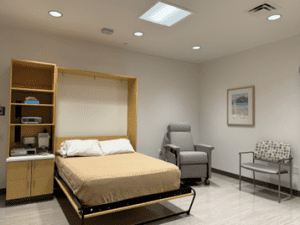
From the outset, optimizing space and creating a welcoming bedroom environment were top priorities. The goal was clear: put patients at ease and design for future growth. “Patient experience was a great consideration for this new lab,” Jason explains. “We wanted them to feel comfortable in this space.” Unlike traditional sleep labs, which often feel cramped and clinical, this new center features open, collaborative spaces for staff and warm, inviting rooms for patients.

Redefining the Sleep Lab Experience

The new Sleep/Wake Center stands apart from older labs in several key ways:

•  Two exam rooms are equipped with dental chairs, allowing on-site dental adjustments and fittings for        mandibular advancement devices (MAD).
•  All bedrooms feature Murphy-style beds, transforming from exam rooms by day to restful bedrooms by night.
•  Adjustable lighting in each bedroom lets patients and staff control brightness and color temperature, ensuring comfort and optimal conditions for both sleep and exams.

These thoughtful touches not only enhance patient care but also make the space more functional and adaptable for staff.


Overcoming Challenges with Innovation

Transforming an older building into a modern sleep center came with its share of hurdles. “Because of the age of the building, some rearranging of the bedrooms had to be done to accommodate plumbing and structural components,” Jason recalls. Even after moving in, sound mitigation remained a challenge. Despite extra insulation, noise from the hallways was still audible in the bedrooms. The solution? White noise speakers in each room and runner rugs in the hallways, creating a quieter, more restful environment for patients.

Staying Ahead in Sleep Medicine

Keeping pace with rapid advancements in sleep technology is no small feat. The team designed the center with flexibility in mind, leaving space in bedside cupboards for future equipment upgrades. “We try to think of everything, but left room in the bedside cupboards for additional equipment as things may change,” Jason notes.

A Vision for the Future

What impact does this new lab hope to have? Jason is optimistic: “We hope that patients will speak highly of their experience at our lab. The idea of coming in for a sleep study can be a mental obstacle as they picture a hospital stay, but our lab is not like that.” By creating a space that feels more like home than a hospital, the team aims to make sleep studies less intimidating and more accessible.

Early Successes and Feedback

Already, the center is receiving positive feedback from both patients and researchers. Patients appreciate the comfort and thoughtful design, while researchers benefit from the flexible, high-tech environment that supports cutting-edge sleep science. The University of Utah’s new Sleep/Wake Center stands as a testament to what’s possible when patient-centered design and technological innovation go hand in hand—thanks to the dedication and vision of the entire University of Utah team who brought this project to fruition.

News

Changes to our CPR/BLS Requirements – Effective 1/1/2026

NOTICE: In accordance with AASM guidelines, effective January 1, 2026, BRPT will only accept BLS/CPR certifications that are in-person with a live/skills component, or that are hybrid certifications that are online but also include a live/skills component. American Heart Association’s RQI certification will remain acceptable. Live/skills components that are conducted on a mannequin will remain acceptable. We will no longer accept online-only earned BLS/CPR certifications.

(updated 6/6/2025)

News

The Rigorous Process Behind The Development Of A Credentialing Exam

By Kenan Hoelke, BS, RPSGT, CCSH, Chair of the BRPT’s Exam Development Committee

Credentialing examinations – especially ones that are NCCA accredited – such as the RPSGT exam, serve as critical benchmarks for professional competency in healthcare and allied health fields. While candidates may focus on preparation and performance, the development of these exams is a meticulous process grounded in scientific rigor, expert collaboration, and ongoing quality assurance.

Establishing the Foundation – A Job Task Analysis
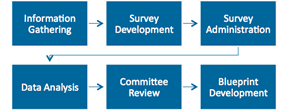
The process begins with a comprehensive Job Task Analysis (JTA) to ensure the exam reflects current professional practice. Conducted approximately every five years, the survey evaluates the responsibilities of an RPSGT and the knowledge and skills needed for the role, providing a benchmark for updating the exam maintained by the BRPT.  The JTA is a standard credentialing practice, used to gather job data and monitor developments in the field. The BRPT conducts its JTA in collaboration with its test development partner, PearsonVUE.

A panel of subject matter experts (SMEs) convenes to identify the essential tasks, knowledge, and skills required for competent performance in the field. To validate these findings, a survey is distributed to a broad sample of practicing professionals, who assess the frequency and importance of each task. The aggregated data informs the exam blueprint, which delineates the content domains and the relative weight each area will carry on the examination. For the RPSGT exam, the blueprint encompasses domains such as patient assessment, equipment setup, data analysis, and therapeutic interventions, each weighted according to its significance in practice.

Exam Construction and Psychometric Oversight
With the blueprint established, the focus shifts to the development of exam content. SMEs craft and review exam questions to ensure clarity, accuracy, and relevance. Some items are designated as “pretest” questions; these do not contribute to a candidate’s score but are evaluated for potential inclusion in future versions of the exam. The role of the psychometricians is paramount throughout this phase. These experts apply advanced statistical methods to evaluate item performance, establish passing standards (using validated approaches such as the Angoff method), and equate different versions of the exam to maintain fairness and consistency. This psychometric oversight guarantees that the exam is both valid and reliable, upholding the integrity of the RPSGT credential.


Secure and Efficient Exam Administration
Once developed, the exam must be delivered in a secure and accessible manner through Pearson VUE which provides secure testing environments. The organization manages candidate scheduling, test administration, and robust security protocols to protect the integrity of the examination process. Additionally, candidates receive immediate and confidential reporting of their results.

Ongoing Quality Assurance and Continuous Improvement
The development process does not conclude with exam administration. Post-examination, psychometricians conduct thorough analyses of item performance, identifying and addressing any questions that do not function as intended. The exam is regularly reviewed and updated to reflect advances in the profession, emerging technologies, and evolving best practices. This commitment to continuous improvement ensures that the exam remains current, relevant, and defensible. All procedures and decisions are meticulously documented to meet accreditation standards and to ensure transparency and accountability throughout the process.

Upholding Standards of Excellence
The creation of a credentialing examination such as the RPSGT is a complex, collaborative endeavor that combines subject matter expertise, psychometric science, and operational excellence. The result is an assessment that accurately reflects professional standards and reliably identifies individuals who are prepared to deliver high-quality care. The next time you encounter a certified professional, you can be assured that their credential is backed by a rigorous, evidence-based process designed to uphold the highest standards of the profession.

About NCCA Accreditation
The National Commission For Certifying Agencies (NCCA) was created in 1987 by the Institute for Credentialing Excellence (ICE) – formerly the National Organization for Competency Assurance (NOCA) – to help ensure the health, welfare, and safety of the public through the accreditation of a variety of certification programs/organizations that assess professional competence. NCCA accredits over 200 of the leading credentialing examinations in the United States, including exams in many of the nursing and other allied health disciplines.

In the professional credentialing industry, NCCA accreditation represents compliance with best credentialing industry practices.  Every five years, the BRPT must apply to have the RPSGT credential reaccredited. In 2022, the RPSGT credential received its accreditation for five more years.


News

Beatrice Blanch Receives 2025 A-STEP/STAR Educational Grant


Arlington, VA – May 5, 2025 – Today, the Board of Registered Polysomnographic Technologists (BRPT) announced the winner of its A-STEP/STAR Educational Grant Program for individuals interested in pursuing a career in sleep technology and/or those who are currently working as sleep technicians who would like to become a registered polysomnographic technologist (RPSGT). Beatrice Blanch, a sleep physiologist at Auckland City Hospital in Auckland, New Zealand was selected out of more than 40 applications. Applicants represented 20 U.S. states and spanned the globe, including countries such as New Zealand, Saudi Arabia, the Philippines, Qatar, Egypt, India, and Canada.

“At Auckland City Hospital, New Zealand’s largest public hospital, Beatrice has seen firsthand how untreated sleep disorders can deepen existing health inequities—particularly among underserved Māori and Pacific communities,” said Board member Michelle DiMaria, BS, RRT, RPSGT, Chair of the Scholarship Committee. “Driven by a passion for health equity and the transformative power of education, she is committed to empowering patients through knowledge and aims to create accessible, supportive spaces for those living with sleep disorders. Earning the RPSGT credential will further her impact in the field of sleep health.”

Beatrice will receive a grant of up to $800 towards an A-STEP or STAR designated educational program.

The application window was open from February 26 through March 26, 2025. The BRPT’s Scholarship Committee reviewed all applications through a carefully crafted rubric to determine the best qualified applicant.

About The BRPT
The BRPT develops and administers credentialing exams for polysomnographic technologists and technicians. The RPSGT is respected worldwide as the leading credential for polysomnographic technologists. Since the first credentialing exam administration in 1979, BRPT has credentialed nearly 25,000 RPSGTs worldwide. In May 2014, BRPT launched the Certification In Clinical Sleep Health (CCSH) examination for healthcare providers specializing in sleep medicine who work directly with sleep medicine patients, families and practitioners for patient care management, improved outcomes, and sleep health education and advocacy for patients and the community.

The BRPT is an independent, non-profit certification board that cultivates the highest professional and ethical standards for polysomnographic technologists. In addition to administering the RPSGT, CPSGT, and CCSH exams in the United States and internationally, the BRPT also maintains the RPSGT registry and CPSGT roster. In addition, the BRPT provides its Continuing Sleep Technology Education (CSTE) Program for educational providers seeking continuing education credits for their offerings. For more information, please visit  brpt.taupecatstudios.dev.

News

Upcoming Changes to the BRPT ADA Request Policy

Important Notice:  Starting June 1, 2025, the BRPT will no longer allow extra test time as an accommodation under the Americans with Disabilities Act (ADA) for individuals whose first language is not English (commonly referred to as ESL, or English as a Second Language).  This change is because speaking English as a second language is not considered a disability under the ADA.  Instead, the BRPT will follow the ESL policy used by its test provider, Pearson VUE.  Under this policy, candidates who qualify for an ESL accommodation will receive an additional 30 minutes of testing time.  Further details regarding eligibility for this option will become available on June 1, 2025.